Showing posts with label garden. Show all posts

Tuesday, December 1, 2015

Worms!


A few years ago, when we started the Learning Garden at SMU, Dick Langill donated a pile of worms from his home garden, so that we could start our own worm bin. The fat red worms ate a lot of compost, multiplied and eventually needed more space to stretch out.

We now had more than enough to share so that others could start their own worm bins. The great thing about worm bins is that the worms eat up the compost and make rich soil that provides a low cost and a natural way to feed the plants. Worm tea made from worm castings (yup, worm poop) is the best fertilizer there is.
worm bins
Glad to have SMU alum, Sarah Gabel, back to help with the garden!

In the beginning of Fall semester, Sky organized a worm bin building workshop. It takes two plastic tubs and some holes. There are many variations of this design, here is one from Seattle Tilth. We started with our huge pile of red worms that needed to be split up. The worms had to be picked out by hand and added to a fresh pile of newspaper strips and compost.

Hand picking worms out of the rich soil.

Everyone got some worms and bins to take home for their gardens and in Annabel's case, for her dorm room. Since worm bins don't smell, they are a great and easy way to compost indoors.
Pam Holsinger-Fuchs adopts some garden worms for her garden.
Alan Tyler has a pile of worms to take home too.
The best part is that by using a worm bin, you turn your food waste into a reusable resource that goes back into the garden instead of the landfill to produce methane gas. According to the EPA, food waste that goes to the landfill breaks down anaerobically and produces methane, which is 21 times more potent than CO2 as a greenhouse gas. By feeding the worms, you are actually helping reduce greenhouse gas emissions and feeding your garden to grow more food.

OIKOS FYS101 class takes veggies to the Food Bank
Here is what we do with the food we grow. Our First Year Seminar class took this harvest to the Thurston County Food Bank where we learned about how this local non-profit helps eliminate hunger, diverts good food from going to the landfill and provides healthy and dignified food options to people in need.

Wednesday, November 12, 2014

Vertical Pallet Garden

Don't miss this fun workshop on building vertical garden boxes from old pallets on November 14th. Student, Steven Caron and Sky Myers will be leading the workshop, based on Steven’s plans.

Thursday, May 29, 2014

Sustainability, Place-based Learning, and the Campus Garden


Dr. Tema Milstein (UNM), award-winning journalist and eco-pedagogist, visited as a guest facilitator at an afternoon workshop focusing on using SMU’s garden as a “learning laboratory” for teaching and learning.

Participants included: Olivia Archibald, Heather Grob, David Martin, Teresa Winstead, Kathleen McCain, Julia Chavez, Ernesto Chavez, Mary Jo Hartman and Irina Gendelman

In the tradition of Hands-on Teaching and Place-based Learning and following the concept of Washington Center’s Curriculum for the Bioregion, the workshop focused on the ways that we can prepare undergraduates to live in a world where the complex issues of environmental equality, community health and well-being, environmental justice, and sustainability are paramount.

Faculty and staff discussed the Learning Garden as a laboratory and envisioned a collection of teaching approaches to build sustainability concepts and place-based learning into a wide array of undergraduate courses that can be used to engage students with the issues facing the bioregion.
   

Dr. Milstein’s work, which includes whale and community-based participatory research, focuses on communication as a cultural force in the nexus of humanity and ecology. She is Associate Professor in the Department of Communication & Journalism at the University of New Mexico.  Among her publications, Dr. Milstein’s article “Greening Communication” was published in Greening the Academy: Ecopedagogy Through the Liberal Arts, a 2013 Critics Book Choice Award from the American Educational Studies Association.

Wednesday, April 23, 2014

Garden Sale

Our first garden sale of the year was a success! Come by on Friday and we will have more tomatoes, herbs greens, rhubarb, strawberries, raspberries, flowers, native trees and more! Everything is organic and non-gmo.


UNI 101 students selling plants for the garden

Sunday, April 6, 2014

A Laboratory for Learning

The SMU Learning Garden is a laboratory for a hands-on exploration of subjects such as sustainability, food justice, urban farming and engineering.

On Earth Day, April 22 at 6:30pm we will be screening the film Growing Cities in Harned Hall 110 (free). The film examines the role of urban farming in America and the potential of urban farms to revitalize the city and to improve the ways that we eat and live. It will be followed by a discussion with a panel of local farmers and food activists. Check out the full program here. If this inspires you to action, stop by the SMU Learning Garden just outside of the cafeteria.

The campus garden is a perfect place to apply theory to practice and to experiment with urban farming and sustainability ideas. It is a lab to learn and to model  sustainable ways to produce food on a small plot of land. For example, most recently, we have faced the problem of water. EPA cites that sustainable water management is essential to ensuring the environmental and economic sustainability of our communities.
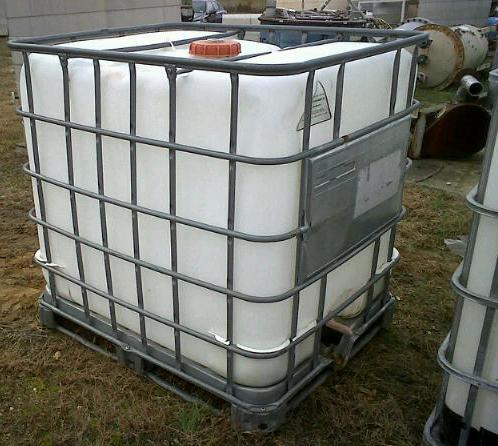
So we asked, how can we collect and use rain water to water plants in the garden? We began with a 260 gallon food-grade tote, found on Craigslist for $100. If you do a search online, you will find that there are plenty of these containers available for re-use after they have been emptied of their original contents.

Next, we had to figure out how to install the massive tote in the garden. Since the plot is in the center of campus and highly visible, aesthetics are just as important as function.

Maintenance technician, Vernon Randloph, came up with the ingenious design. He covered the plastic container with cedar siding to blend it into the garden and raised it to create water pressure for watering.

To our surprise, the 260 gal. tote filled up after only a couple of days of rain! Vernon had to engineer a design that dealt with the overflow.  Once the tote was full, it would spill over and create a drainage problem around the base of the building and in the garden, so Vernon rerouted the overflow back into the building drain. Check out the incoming and the outgoing pipes and the awesome water pressure. Now we have a model for a water collection system that can be used for demonstrations of the design, class experiments as well as for watering the garden.

What do we do with the food that we grow? In the Benedictine spirit of service to the community, it goes to the Thurston County Food Bank.

Thursday, April 3, 2014

Spring clean up

  Weeding, mulching and pulling up carrots and beets that survived the winter!

Tuesday, September 4, 2012

Wednesday, Sept 5 Garden Workshop and Party


We are getting that new roof up on the shed today hooray! This Wednesday, Lynn will bring the camp stove again and prepare fried stuffed squash blossoms for people to try between noon and 2:00pm. 

Cooking from the garden will be a part of the September series workshops. 

We also have lettuce starts for transplanting into gallon pots to put in the greenhouse as well as seed some lettuce directly into pots and into the greenhouse. 

fried squash blossoms
This will be great fun and delicious!! Lynn will have her books for plant Identification and garden questions too.

Next workshop is Wednesday, Sept. 5 from 12-2pm in the Learning Garden (located just outside of the dining hall by the outdoor tables)

Monday, July 16, 2012

Micro-irrigation continued


setting up micro-irrigation

This is a continuation of last week’s workshop. Newcomers welcome. You did not have to have come to the last workshop to attend this one. Rebeca will continue setting up the micro-irrigation system. Come and learn how it works!

Garden Party Workshop
Micro-sprinkling for a small garden
The Learning Garden (just outside of the cafeteria)
Thursday, July 19

Learn about how to set up a water-saving small scale irrigation system. You can do this at home. It’s inexpensive and saves you water and time. Learn by helping set up our own micro-sprinklers in the garden beds. It’s so easy you will be amazed.

Everyone is welcome! Workshop led by local gardener Rebeca Potasnik


Also, come taste the ripe berries and take some herbs home – there are still raspberries in the garden and fresh oregano and mint!

Wednesday, November 9, 2011

Winter Garden

It is time for another garden party in the Learning Garden!

Growing your own food can save you a lot of money and help you eat well.

Local expert gardener, Lynn Villella, will lead a workshop on how to winterize your garden. Lynn will show us how to prepare the garden beds for the winter and what kind of crops to plant.

Drop by for a free hands on “Winter Garden” workshop in the SMU Learning Garden.

Tuesday, Nov 15
Between 9:30 and 1pm (drop by any time, stay as long as you like)
The Learning Garden (outside of the dining hall)

Be prepared to pull radishes, plant garlic, have some hot cider and more!

Thursday, September 15, 2011

Heirloom Tomatoes

ripe in the garden

Thursday, July 14, 2011

Art in the Garden

Olympia artist David Scherer Water will be holding an art workshop in the SMU garden next Tuesday, July 19 from 1:30-3:30pm.

Join the Anthropology of New Urbanism class and help make beautiful garden art out of found and recycled objects.


Please seek out and bring any plastic, metal or non-food lightweight junk you may find, acquire from housemates, family. Broken toys are great.

David Scherer Water enjoys making things out of junk. He's the artist responsible for "The Flat Win Company" which sells neatly packaged found materials back to people. Products include empty beer cans, burnt toast, twigs and small bags of gravel. David got his first "big break" as a visual artist when he was given permission to decorate the lobby and halls of a small apartment complex in downtown Olympia, The Martin Building.

Wednesday, June 1, 2011

A New Service Program - Grow Gardens in Schools


Wondering what to do after you graduate next year? Take a look at this awesome new program. It's like Americorps but all about growing gardens.

"The vision for FoodCorps is to recruit young adults for a yearlong term of public service in school food systems. Once stationed, FoodCorps members will build Farm to School supply chains, expand food system and nutrition education programs, and build and tend school food gardens.

The ultimate goal of the organization is to increase the health and prosperity of vulnerable children while investing in the next generation of farmers and public health leaders."

This seems like a great opportunity to participate in the new garden revolution. And there are other perks too. Participants receive the following benefits:

A biweekly stipend totaling $15,000 for the year
Health insurance, if not covered under another policy
Child care, if necessary
Student loan forbearance
A $5,550 Education Award for past or future education
Career mentoring, professional development, and strong work experience

Wednesday, May 18, 2011

Garden Visitors

Garden Parties should always start with lunch in the sun.
for more pics go here

There was a new visitor squatting on the side of the shed - a wasp. She didn't bother us.

and another one, lounging on a mint leaf - a lady bug with no dots.

we built a trellis, planted some lettuce and weeded and fed the strawberries.

Thanks to Tanya from Bon Appetit for feeding us with iced tea and treats!!

for more pics go here

Tuesday, May 17, 2011

Garden Party #2 2011


The sun is finally out and the weather report says that it should get up into the 70s this week. Come garden with us tomorrow Wed May 18, 12-1pm. We will be planting, weeding and building stuff in the garden. Bring your lunch and eat outside!

Friday, December 3, 2010

Winterizing Your Own Garden

Hello again to all our readers, volunteers, and fellow garden and sustainability enthusiasts,

For those of you who, like me, are perhaps more enthusiasts and less experts, we have been doing some further research about important things to remember when putting your garden down to hibernate for the winter months. The following are some important and easy tips and tasks to remember to preserve your garden until Puxatony Phil announces the arrival of spring:


  • Rake the leaves—Leaves might seem like a natural cover and a good insulator, but they can mat, and suffocate your plants. So rake them up, and compost, compost, compost.


  • Pull up Annuals—Any plants that have fallen victim to frost, and won’t be coming back next year can and should be pulled up. You can add these plants to your compost, just be sure to check and throw out any you think might be diseased.


  • Cut back the Perennials—Be sure to trim back any dead or unsightly leaves, etc. You probably won’t need to get rid of the whole plant, and those leaves that still look good can add some color to your winterized garden until you start growing again.


  • Weed—Might seem a bit superfluous to be weeding, particularly if you aren’t planning on growing anything this winter, but this gives you the opportunity to make sure weeds don’t get the head start on you in the spring.


  • Dig up tender bulbs—Any summer-blooming plants aren’t likely to survive the winter months in a USDA zone of 9, or colder. (Click on the map below to visit the USDA's website and learn more about your own area) Store bulbs in Vermiculite in a paper bag in a cool (65-degrees F or cooler), dry spot. (Tender bulbs may include: Begonias, Gladiolus, Dahlias, and other summer blooms)


  • Protect broad leaved Evergreens—Spray them with antidesiccant. This will prevent water loss and dehydration of your plants from drying winter winds.
    (Broad leaved evergreens might include: Rhodendrons or Holly)


  • Water Evergreens (and small trees)—If your fall weather is particularly dry, you want to make sure that the leaves and stems of your evergreens and trees are healthy and plump to survive the drying winds and winter months.


  • Save your favorite plants before the frosts hits, small annuals and herbs can flourish and brighten up windowsills in the winter months.


  • Be careful to avoid fertilizing your garden, or pruning at the end of a plant’s season, this promotes new growth that will be killed off by frost and cold. Trimming dead or damaged branches or leaves is fine though.


  • Winter mulch Perennials—If winter temperatures are likely to fall below 10-degrees F, you should provide your perennials with winter mulch to insulate them from the cold. Simple and lightweight mulches such as: shredded autumn leaves, pine needles, or straw will work. Avoid compact mulches and whole leaves since they can suffocate your plants.

    But just because it’s winter doesn’t mean there aren’t plants that will flourish in your garden in the winter months. One of the things we did in winterizing our garden was to plant plants which would reintroduce nitrogen and other nutrients this year’s crops may have taken out of our soil.

    This is a sample of what the Hayes Valley Farm, an urban farm in San Francisco, does to layer and add nutrients to their soil.

Again, thank you to all of you who follow our Learning garden's progress here on the blog, and have volunteered your time and hands to keeping our garden beautiful and running smoothly. And best of luck with your own winter gardens.

Monday, November 22, 2010

Winter Garden-land

Last Friday the garden hosted an expert gardener, Lynn Villella, who walked us through the process of preparing our learning garden for the inclement weather of the winter months in the great Northwest.


And not a moment too soon, as the following days before our Thanksgiving break the garden seemed to be growing snow.


We had wonderful volunteers and hands that came out last week to help us prepare the garden for a winter hibernation. As per our usual M.O. we had rain and light showers for our garden gathering, but we still managed to recruit some brave souls to help us.


Our volunteers helped us to clean out the beds, compost old plants, and plant faba beans in the empty beds to help reintroduce some nitrogen and other nutrient goodies into the soil for next year's plants.

Gardens in front yards or other high visibility locations used to be a taboo, because of the pressure for them to be maintained and looking beautiful, but after our clean-up our expert thinks we'd pass inspection.


We also enjoyed some hot apple cider and treats from Bon Appétit.

And our volunteers even managed to take home some mint starts for themselves.

A very productive, and timely work party for our Learning garden.

Many thanks to everyone who have been following us here on the blog, and volunteering your time in the garden helping to keep it beautiful, and running smoothly. Our wonderful garden wouldn't be possible without the help from all you.

Monday, November 15, 2010

Winter Garden

This year’s theme for International Education Week is Striving for a Sustainable Future. With sustainable future in mind, gardens are becoming increasingly popular all over US campuses, in people’s homes and in cities!

For example, take a look at a San Francisco’s neighborhood recent re-use of a freeway ramp into an urban farm!

In this spirit, we are excited to offer you a Garden Workshop this coming Friday in SMU’s new campus garden.

Garden experts will be on hand to tell and show you how to prepare your gardens for the winter.

Dress to be outside and get dirty! Bon Appétit will provide hot apple cider and there will be light snacks.

At 2pm, we will gather in the St.Gertrude (dining hall) atrium for a talk, followed by some hands on work in the garden.

NOTE: the IEW poster says 3-5, but we are actually starting at 2pm!

Friday, Nov. 19
Winter Garden Planting
SMU Community Garden, 2-5 p.m.

Wednesday, October 13, 2010

The Potatoes Are In!

Warm greetings to all our readers, and volunteers who have helped to keep our garden running and beautiful.

Many of you have seen first-hand the transformation that has taken place in our learning garden since we first began with a grass, and ivy-covered patch of land beside our Dining Hall.
We're happy to announce another milestone...

The potatoes are in!
And we'd like to invite all of you to come out to help us dig them up.

We will be harvesting them next Wednesday, October 20, at 3pm .

The box of produce will be donated to the Thurston County Food Bank. So please come out and join us in supporting sustainability, our local food bank, and keeping our learning garden growing and beautiful. Thank you to all who have been following us here on the blog, and volunteering, for all your support, and lending us your green thumbs. See you Wednesday!

Friday, September 10, 2010

New Students

First Year students come to work in the garden

they mulch the tomato plants with used coffee grounds from the campus cafeteria

paint some garden signs and assemble the new compost bin

pull up more ivy

weed the ground around the garden

mount some bird houses on the fence

and pick some viggies

Thursday, August 12, 2010

Watering Meditation

Watering the garden is a meditative way to start the morning. You stand patiently among the plants and watch the earth soak in moisture. While we wait for facilities to set us up with a more convenient water access, we've devised an irrigation system with soaker hoses and and watering cans. If you would like to take on a day to water the garden, let us know. We'd be happy to add you to our schedule.

Rosemary waters the tomato plants. Photo by Prof. David Suter